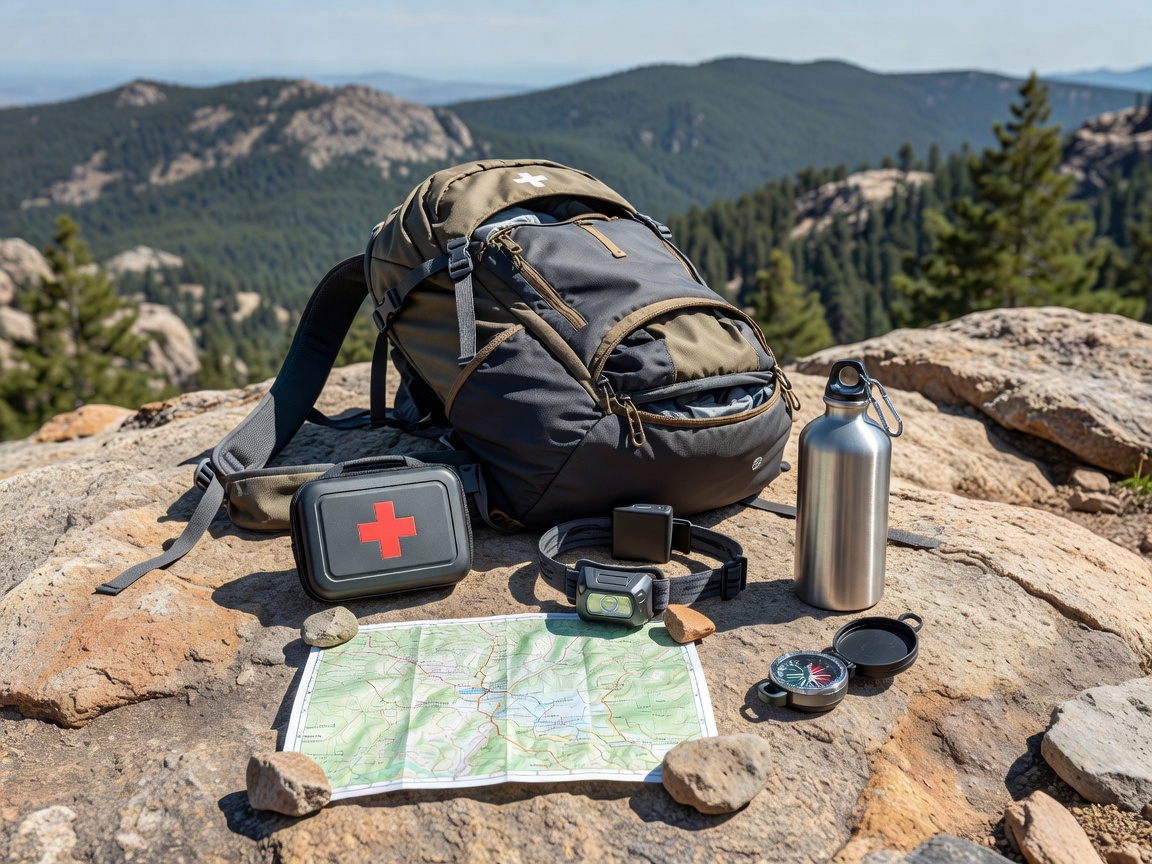
Whether you are setting off on a 2-hour nature walk or an 8-hour mountain pass trek, unexpected situations can arise in the backcountry. Sudden weather shifts, unexpected trail delays, or minor injuries can quickly turn an easy walk into a challenge.
The "Ten Essentials" framework was created by outdoor safety experts to answer a simple question: If something goes wrong on the trail, do you have what you need to survive comfortably until help arrives or until you navigate back?
-
1 Navigation (Map & Compass / Offline GPS)
Cell coverage often fails in mountain valleys. Always carry a physical topographic paper map paired with a magnetic compass, or pre-download offline maps on your mobile device.
-
2 Hydration (Water & Purification Tablets)
Carry minimum 0.5 to 1 liter per hour of hiking. Include purification tablets or a compact squeeze filter in case your trip takes longer than planned.
-
3 Nutrition (Extra High-Calorie Snacks)
Pack an extra day's worth of non-perishable food such as energy bars, nuts, trail mix, or dried fruits to maintain energy levels during unexpected delays.
-
4 Insulation & Weather Layering
Temperatures can drop rapidly at higher elevations. Always pack a lightweight windproof/waterproof rain shell and an extra fleece or thermal layer.
-
5 First Aid & Blister Kit
Equip your pack with adhesive bandages, antiseptic wipes, sterile gauze, ibuprofen, tweezers, and moleskin for preventing friction blisters early.
-
6 Illumination (Headlamp or Flashlight)
A compact headlamp with fresh batteries ensures you can navigate safely after dark if sunset arrives faster than expected.
-
7 Sun Protection (Hat, Sunglasses & Sunscreen)
Protect your skin and eyes against high-altitude UV radiation with broad-spectrum sunscreen, lip balm with SPF, UV-rated sunglasses, and a wide-brim hat.
-
8 Fire Starter & Waterproof Matches
Pack stormproof matches, a ferro rod, or a small lighter in a waterproof bag to enable emergency signal or warmth fires where permitted.
-
9 Multi-Tool or Pocket Knife
Handy for gear repairs, food preparation, cutting cordage, or managing unexpected trail repairs on trekking poles or pack straps.
-
10 Emergency Shelter (Space Blanket or Bivy)
An ultra-lightweight thermal space blanket weighs under 3 ounces and retains up to 90% of your body heat in emergency bivouac situations.
How to Weight and Balance Your Daypack
Place heavy items (such as water reservoirs and emergency gear) close to your back in the middle section of the pack. Lighter clothing layers can go in the bottom, while frequently accessed items (snacks, sun protection, headlamp) belong in top lid pockets.
Generate a Climate-Specific Gear List
Use our interactive Gear Checklist Generator to get customized packing suggestions for warm, alpine, or desert conditions.
Open Gear Checklist Generator →